
Mercedes-Benz G-Class Tuning Parts Buying Guide: Fitment-First Upgrades for G550, G500, and AMG G63
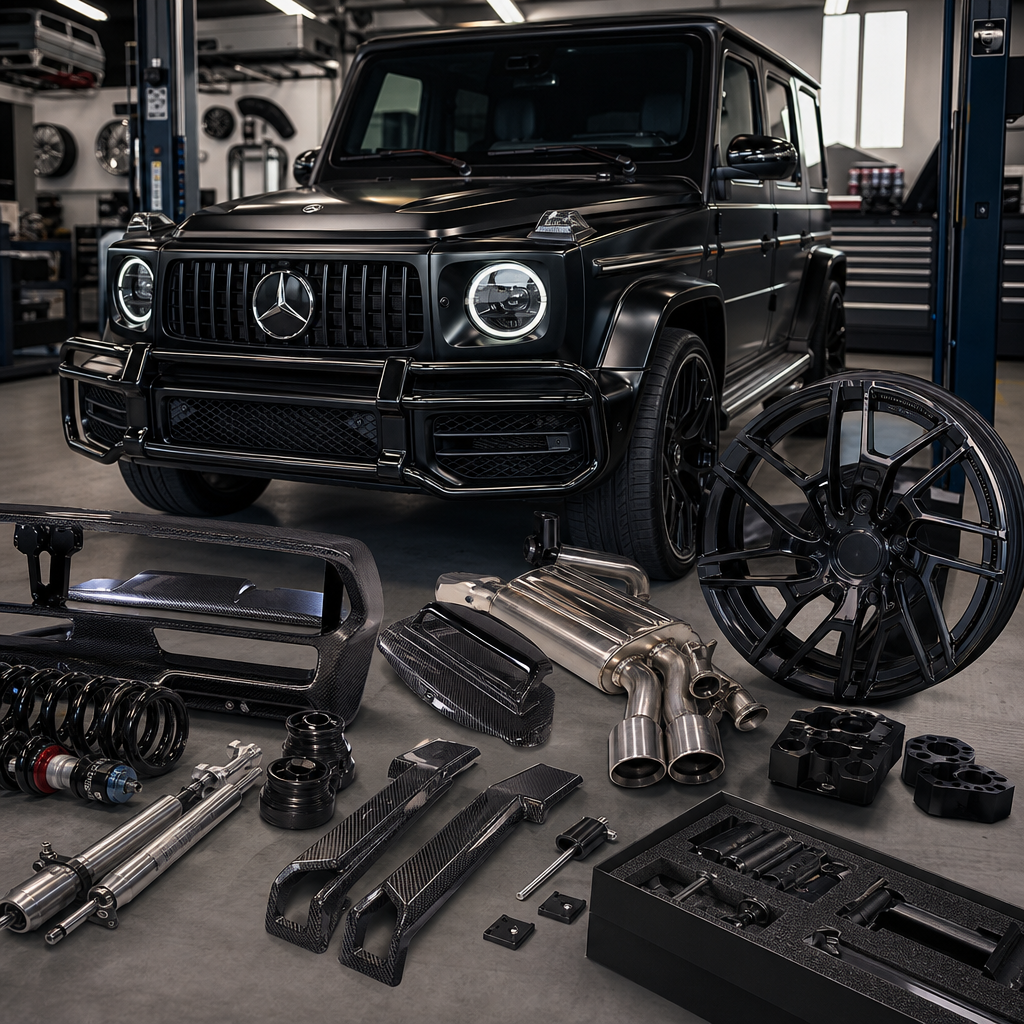
Mercedes-Benz G-Class Tuning Parts Buying Guide: Fitment-First Upgrades for G550, G500, and AMG G63
The Mercedes-Benz G-Class is one of the few luxury SUVs where presence, engineering, heritage, and personalization all matter at the same time. Whether you drive a G550, G500, AMG G63, or a newer W465-generation G-Wagon, choosing the right upgrades is not simply a matter of picking the most aggressive style or loudest exhaust. With the G-Class, fitment, material quality, compatibility, and installation confidence matter as much as appearance and performance.
That is especially true when shopping for Mercedes-Benz G-Class tuning parts. Exterior aero components, forged wheels, performance exhaust systems, interior carbon fiber upgrades, intake systems, suspension components, and trim pieces all need to match the correct model year, chassis generation, trim level, and factory equipment. A part that looks correct in photos may not fit properly if it was designed for a different bumper, grille, exhaust layout, sensor package, or AMG-specific body configuration.
This buying guide is built around a fitment-first approach. The goal is to help G-Class owners understand what to check before purchasing, which upgrade categories require extra attention, and how to shop confidently for premium parts through a trusted source.
At 3W Distributing, the focus is on authentic, high-quality upgrades for premium European and exotic vehicles, including carefully selected BRABUS parts, Mercedes-Benz G-Class tuning parts, aero kits, forged wheels, performance exhaust systems, and interior carbon fiber upgrades.
If you already know what you are looking for, you can start here: Shop Mercedes-Benz G-Class tuning parts.
—
Why Fitment Matters Most When Buying Mercedes-Benz G-Class Tuning Parts
The G-Class has a familiar silhouette, but that does not mean every part fits every G-Wagon. Many tuning mistakes happen because owners shop by vehicle name alone instead of confirming the specific generation, model year, trim, bumper design, and factory equipment.
A “G-Class” part listing is not enough. Before buying, confirm the exact application.
The G-Class Has Multiple Generations and Trim Differences
The Mercedes-Benz G-Class has evolved through multiple platforms and model updates. Enthusiasts and aftermarket suppliers often reference these chassis designations:
- W463 classic-generation G-Class
- W463A / W464 references for newer-generation G-Class models, depending on market, catalog, and aftermarket terminology
- W465 for the latest updated G-Class applications
- AMG G63-specific models
- G550 / G500-specific models
The exterior shape may appear consistent, but the details can vary significantly. Bumpers, grille structures, fender flares, hood contours, lighting, exhaust exit locations, underbody mounting points, interior trim layouts, and sensor placements may differ by year and trim.
That means an exterior carbon fiber piece, aero kit component, exhaust system, wheel fitment, or intake upgrade must be selected for the correct vehicle—not just for “G-Class” in general.
AMG G63 Parts May Not Fit G550 or G500 Models
AMG G63 models often have unique factory components compared with G550 or G500 variants. These differences may include:
- AMG-specific front and rear bumper designs
- Different exhaust routing or side-exit exhaust layouts
- Wider or differently shaped fender flares
- AMG grille configurations
- Larger brake packages requiring different wheel clearance
- Trim-specific aerodynamic styling
- Model-specific suspension and chassis details
For example, an AMG-focused carbon fiber diffuser or performance exhaust system may not align with a non-AMG bumper or exhaust layout. Likewise, wheels that clear AMG brakes may have different offset or spoke-profile requirements than wheels intended for a G550 or G500.
If you are shopping for AMG-specific upgrades, start with a dedicated search path such as Search G63 AMG tuning parts, then confirm the exact model year and fitment details before purchase.
Model Year Is Just as Important as Model Name
A product title may say “Mercedes G-Class,” but that does not always answer the most important fitment questions. Before ordering any tuning part, confirm:
- Model year
- Chassis generation
- Trim level
- Engine variant
- AMG or non-AMG configuration
- Factory bumper design
- Factory wheel and brake package
- Factory suspension type
- Sensor, camera, and driver-assistance equipment
- Existing aftermarket modifications
- VIN, when needed for confirmation
This is especially important for exterior components, exhaust systems, suspension upgrades, wheels, and newer-generation W465 applications.
A fitment-first purchase protects the finish of the vehicle, reduces installation complications, and helps ensure the final result looks intentional rather than improvised.
—
The Main Categories of Mercedes-Benz G-Class Tuning Parts
Mercedes-Benz G-Class upgrades generally fall into several major categories: exterior styling, exhaust, wheels, suspension, interior trim, intake components, and brand-specific tuning parts. Each category has different fitment risks and buying criteria.
Exterior Styling and Body Components
Exterior upgrades are among the most popular G-Class modifications because the vehicle’s upright architecture responds well to carefully designed visual enhancements. Common exterior tuning parts include:
- Front lips
- Rear diffusers
- Side skirts
- Roof spoilers
- Fender flares
- Grilles
- Hood upgrades
- Mirror caps
- Carbon fiber exterior trim
- Aero kit components
The best exterior upgrades should enhance the factory proportions of the G-Class rather than fight them. Poorly fitted parts, inconsistent weave, weak mounting points, and uneven panel gaps can make an expensive SUV look unfinished.
When evaluating exterior G-Class body parts, pay close attention to:
- Material quality
- Carbon fiber weave consistency, where applicable
- Surface finish
- Clear-coat quality
- Paint preparation requirements
- OEM bumper compatibility
- Sensor and camera clearance
- Mounting hardware and attachment method
- Whether trimming or modification is required
- Compatibility with AMG or non-AMG bumpers
Modern G-Class models may include cameras, parking sensors, radar components, lighting elements, and trim pieces integrated into bumpers and grilles. An aero component that interferes with these systems can create installation challenges or affect function.
If you are considering carbon exterior upgrades, begin with a focused product search such as Browse Mercedes-Benz carbon fiber exterior parts.
For newer applications, 3W Distributing also lists premium aero options such as the Urban Automotive Mercedes W465 G-Wagon aero kit, designed for 2025+ W465 G-Wagon fitment research. As with any aero kit, buyers should confirm exact vehicle compatibility, installation requirements, and finish expectations before ordering.
Performance Exhaust Systems
A G-Class exhaust upgrade can change the driving experience dramatically, but it needs to be chosen carefully. The right exhaust should match the vehicle’s trim, factory exhaust layout, sound expectations, and installation requirements.
Common exhaust-related upgrades include:
- Cat-back exhaust systems
- Valved exhaust systems
- Axle-back systems
- Exhaust tips
- Mid-pipes, where applicable
For G-Class owners, the most important exhaust buying criteria are:
- G550/G500 versus AMG G63 compatibility
- Factory valve integration, if applicable
- Exhaust tip placement
- Side-exit versus rear-exit layout
- Sound profile
- Drone characteristics
- Material quality
- Installation complexity
- Heat management
- Clearance around bodywork and trim
- Local emissions and noise regulations
Avoid choosing an exhaust based only on videos. Sound clips can be useful, but microphone type, recording distance, surrounding buildings, engine temperature, and driving mode can all influence how an exhaust appears online.
A good G-Class exhaust should balance tone, craftsmanship, drivability, and correct fitment. It should not require forcing parts into place or accepting poor clearance. For owners comparing systems, Search G-Class exhaust upgrades to review available product options.
3W Distributing also carries premium Mercedes AMG exhaust-related products, including FI Exhaust Mercedes AMG exhaust systems for compatible applications. Always confirm whether a specific FI Exhaust product is built for your exact AMG model before assuming cross-fitment with the G-Class.
Wheels, Spacers, and Fitment Accessories
Wheel upgrades have a major visual impact on the G-Class, but they also require technical precision. The G-Class is a heavy luxury SUV, so wheel quality, load rating, and correct sizing are not optional details.
When evaluating forged wheels or other premium wheel upgrades, confirm:
- Diameter
- Width
- Offset
- Bolt pattern
- Center bore
- Brake clearance
- Load rating
- Tire size compatibility
- Tire profile
- Suspension clearance
- Fender clearance
- TPMS compatibility, if applicable
AMG G63 models may have larger brakes, which can create additional wheel clearance requirements. A wheel may have the right diameter and bolt pattern but still fail to clear the brake caliper if the spoke profile is not correct.
The G-Class also has a distinctive stance. Some owners look for a wider, more planted look through wheel offset changes or spacers. Spacers must be chosen carefully. They should match the correct bolt pattern and hub requirements, maintain safe engagement, and avoid creating vibration, rubbing, or premature wheel-bearing wear.
Professional installation is strongly recommended for wheels, spacers, and related fitment accessories. Proper torque procedures and re-checks are important on any vehicle, especially a heavy SUV.
To review available options, Shop premium wheels and fitment accessories.
Suspension and Lowering Components
Suspension upgrades can improve stance and road presence, but they should be selected with care. The G-Class has a unique driving character, and not every suspension change will suit every owner’s expectations.
Common suspension-related upgrades may include:
- Lowering springs
- Suspension modules
- Adjustable components
- Ride-height-related accessories
Before choosing suspension components, evaluate:
- Compatibility with the factory suspension type
- Desired ride height
- Ride comfort expectations
- Alignment requirements
- Wheel and tire clearance
- Potential rubbing under compression
- Installation complexity
- Effect on daily drivability
- Compatibility with existing wheel upgrades
A lowered G-Class can look more purposeful, but excessive lowering may compromise comfort, clearance, and usability. Owners who drive frequently in urban areas, over uneven roads, or in winter conditions should be especially careful when choosing ride-height changes.
After suspension installation, alignment should be checked, and wheel/tire clearance should be verified under real driving conditions. You can begin your search here: Shop suspension upgrades.
Interior Carbon Fiber Upgrades
Interior carbon fiber upgrades are a popular way to give the G-Class cabin a more bespoke, performance-oriented feel. Because the G-Class interior is built around strong geometric lines, properly fitted trim can integrate well when the material quality and finish are correct.
Common interior carbon fiber upgrades may include:
- Dashboard trim
- Center console trim
- Door trim
- Steering wheel trim
- Seat-back trim
- Switch surround accents
- Entry or convenience-related trim pieces
When evaluating interior carbon fiber upgrades, consider:
- Exact cabin generation
- Left-hand-drive or right-hand-drive compatibility, where relevant
- Trim shape and mounting method
- Carbon weave direction
- Gloss or matte finish
- Compatibility with factory ambient lighting
- Compatibility with existing interior trim
- Whether the part is replacement or overlay-style
Interior parts are highly visible from the driver’s seat. Slight fitment issues, rough edges, or inconsistent finish can be noticeable every time you enter the vehicle. For that reason, interior upgrades should be selected with the same care as exterior aero components.
3W Distributing also offers premium convenience and trim-related upgrades such as BRABUS Easy Entry, which is useful for owners researching authorized BRABUS parts and interior-oriented enhancements.
Intake and Engine-Bay Upgrades
Engine-bay upgrades for the G-Class should be approached with the same fitment discipline as exterior and exhaust components. Intake systems, carbon engine covers, and related performance parts may vary significantly between G550, G500, AMG G63, and newer W465 applications.
When shopping for intake-related upgrades, confirm:
- Exact engine application
- Chassis generation
- AMG versus non-AMG compatibility
- Sensor integration
- Heat shielding
- Filter access and serviceability
- Clearance around factory components
- Installation procedure
- Any calibration or emissions considerations
Avoid assuming that an intake for one Mercedes-AMG application will fit another. Even when engines are related, packaging, sensors, ducting, and mounting points may differ.
For example, the Eventuri Mercedes W465 G63 AMG carbon intake is listed specifically for Mercedes W465 G63 AMG research. Owners should verify exact model-year compatibility and installation requirements before purchase.
Engine-bay upgrades are not only about appearance. Fitment, thermal management, airflow path design, and serviceability all matter.
—
How to Evaluate Quality Before Buying G-Class Tuning Parts
Premium vehicles deserve premium parts. That does not mean every upgrade needs to be extreme, but it does mean the materials, finish, design, and fitment should meet a high standard.
Material Quality
Material quality varies widely in the aftermarket. For G-Class tuning parts, commonly encountered materials include:
- Carbon fiber
- Stainless steel
- Titanium, depending on the exhaust application
- Aluminum
- Forged aluminum for wheels
- Composite materials
- Painted or clear-coated exterior components
For carbon fiber parts, examine the weave, finish, and clear coat. For exhaust systems, look at the construction material, weld quality, valve integration, and hardware. For wheels, load rating and manufacturing quality are critical.
Fit and Finish
Fit and finish are what separate a premium upgrade from a part that merely photographs well. Key signs of quality include:
- Clean edges
- Consistent weave or surface texture
- Proper mounting-point alignment
- Smooth clear coat
- Even panel gaps
- No excessive trimming required
- Hardware that suits the application
- Proper clearance around sensors and factory components
A G-Class is a high-value vehicle, so a part that creates poor panel alignment or rattles is not a good upgrade, even if it looks appealing in product photos.
Brand and Sourcing Confidence
Authentic sourcing matters. Premium aftermarket brands invest in design, development, tooling, materials, and fitment testing. Unverified copies may look similar online but can differ in finish, durability, mounting accuracy, and installation consistency.
3W Distributing focuses on premium European and exotic vehicle upgrades, including authentic BRABUS parts, aero kits, forged wheels, performance exhaust systems, and carbon fiber components for luxury applications.
For G-Class owners interested in BRABUS-specific components, examples for fitment research include:
As always, confirm exact vehicle application before purchasing any BRABUS part.
—
Fitment Checklist Before You Order Mercedes-Benz G-Class Tuning Parts
Before buying any G-Class upgrade, collect the following information. This will help you avoid ordering parts that are visually similar but technically incorrect.
Vehicle Information
Confirm:
- Model year
- Model designation: G550, G500, AMG G63, or other
- Chassis generation: W463, W463A/W464 reference, W465, or market-specific designation
- VIN, when needed
- Engine variant
- Left-hand-drive or right-hand-drive configuration, if relevant
Exterior Configuration
Check:
- Factory front bumper
- Factory rear bumper
- AMG or non-AMG styling
- Fender flare design
- Grille type
- Hood type
- Roof spoiler or existing aero
- Parking sensors
- Cameras
- Radar or driver-assistance equipment
- Existing body modifications
Exhaust Configuration
Check:
- Factory exhaust exit location
- AMG or non-AMG exhaust layout
- Valve control system, if equipped
- Tip style
- Clearance around side steps or body kit components
- Local sound and emissions regulations
Wheel and Suspension Configuration
Check:
- Factory wheel size
- Current tire size
- Brake package
- Desired wheel diameter and width
- Offset range
- Center bore
- Bolt pattern
- Suspension type
- Current or planned lowering
- Fender clearance
Interior Configuration
Check:
- Interior generation
- Trim style
- Steering wheel design
- Console layout
- Ambient lighting features
- Existing carbon fiber or wood trim
- Left-hand-drive or right-hand-drive layout
Installation Considerations
Ask:
- Does the part require painting?
- Does the part require clear-coating?
- Does the part include hardware?
- Is professional installation recommended?
- Are factory clips or fasteners reused?
- Does the part require coding, calibration, or alignment?
- Will sensors, cameras, or valves need adjustment?
This preparation makes it much easier to shop confidently and to communicate clearly with an installer.
—
Buying Tips by Upgrade Goal
Different owners modify the G-Class for different reasons. Some want a more aggressive stance. Others want a richer exhaust tone, a more refined interior, or a complete luxury-performance transformation. The right parts depend on the goal.
If You Want a More Aggressive Exterior
Start with components that complement the G-Class shape without overwhelming it:
- Roof spoiler
- Front lip
- Rear diffuser
- Fender flare accents
- Carbon fiber mirror caps
- Grille upgrades
- Full aero kit, when appropriate
For newer G-Wagon owners, the Urban Automotive Mercedes W465 G-Wagon aero kit is a useful example of a visual carbon fiber aero package designed around a specific W465 application.
The key is to keep the exterior cohesive. Mixing unrelated parts from different styling directions can make the vehicle look less refined. A complete aero strategy usually produces a better result than isolated parts chosen only for aggressiveness.
If You Want a Better Exhaust Tone
Focus on system design and compatibility rather than volume alone.
Consider:
- Valved versus non-valved design
- Cabin sound at cruising speed
- Cold-start behavior
- Tip position
- Material and construction
- Compatibility with factory controls
- Local sound regulations
For a daily-driven G-Class, the best exhaust is usually one that offers presence without constant harshness. An aggressive sound may be appealing at first, but drivability matters over time.
If You Want a Stronger Stance
Wheel fitment is the foundation of stance. Focus on:
- Forged wheel construction
- Correct load rating
- Proper width and offset
- Brake clearance
- Tire sizing
- Suspension compatibility
- Fender clearance
Avoid choosing wheels only by diameter. Width, offset, spoke profile, and tire selection determine how the wheel actually fits the G-Class.
Start your research with Shop wheels.
If You Want a More Premium Cabin
Interior carbon fiber upgrades can modernize the cabin and create a more performance-focused atmosphere. The most successful interior upgrades match the vehicle’s existing trim direction.
Consider:
- Matching carbon weave
- Matching gloss level
- Replacement versus overlay construction
- Trim alignment
- Compatibility with factory controls and lighting
Interior upgrades should feel integrated, not added on.
If You Want a Balanced Build
A balanced G-Class build often includes:
- High-quality exterior carbon fiber accents
- Properly fitted forged wheels
- A refined performance exhaust system
- Select interior carbon fiber upgrades
- Suspension changes only if they suit the intended use
The most successful luxury SUV builds are cohesive. Every upgrade should look and function like it belongs on the vehicle.
—
Common G-Class Tuning Mistakes to Avoid
Buying by Photo Alone
Photos are helpful, but they do not confirm fitment. Always verify model year, chassis, trim, bumper style, and installation requirements.
Assuming AMG and Non-AMG Parts Interchange
AMG G63 parts may not fit G550 or G500 models. Differences in bumpers, exhaust routing, fenders, grilles, and brakes can affect compatibility.
Ignoring Sensors and Cameras
Modern G-Class models may include advanced driver-assistance equipment. Exterior parts must be designed to preserve clearance for sensors and cameras where applicable.
Choosing Wheels Without Confirming Brake Clearance
Bolt pattern and diameter are not enough. AMG brakes may require specific spoke profiles and offsets.
Overlooking Installation Complexity
Some parts may require paint, clear coat, trimming, alignment, coding, or professional installation. Understand the process before purchasing.
Mixing Too Many Styling Directions
A G-Class can handle bold upgrades, but the build should still be cohesive. Combining unrelated aero parts, wheel styles, and finishes can reduce the premium feel.
Forgetting Local Regulations
Exhaust upgrades may be subject to emissions and noise rules. Confirm local requirements before installation.
—
How 3W Distributing Helps G-Class Owners Shop Smarter
3W Distributing is built for premium European and exotic vehicle owners who care about authenticity, product quality, and proper fitment. For the Mercedes-Benz G-Class, that means helping buyers focus on the details that matter before selecting upgrades.
Through 3W Distributing, owners can research and shop categories such as:
- Mercedes-Benz G-Class tuning parts
- BRABUS parts
- Mercedes-Benz G-Class performance parts
- Mercedes G63 AMG tuning parts
- Aero kits
- Forged wheels
- Performance exhaust systems
- Interior carbon fiber upgrades
- Mercedes G-Class carbon fiber parts
Start with the main shop here: Browse 3W products.
You can also visit the main brand site here: 3W Distributing.
—
Recommended Shopping Paths for G-Class Owners
Use these links as starting points for fitment research:
- Shop Mercedes-Benz G-Class tuning parts
- Search G63 AMG tuning parts
- Browse Mercedes-Benz carbon fiber exterior parts
- Search G-Class exhaust upgrades
- Shop premium wheels and fitment accessories
- Shop suspension upgrades
- Research BRABUS rear roof spoiler W463-A
- View Urban Automotive Mercedes W465 G-Wagon aero kit
- View Eventuri Mercedes W465 G63 AMG carbon intake
—
Frequently Asked Questions About Mercedes-Benz G-Class Tuning Parts
Do all Mercedes-Benz G-Class tuning parts fit every G-Wagon?
No. Fitment can vary by model year, chassis generation, trim level, AMG or non-AMG configuration, bumper design, exhaust layout, brake package, and factory equipment. Always confirm exact compatibility before purchasing.
Are AMG G63 tuning parts compatible with G550 or G500 models?
Not always. AMG G63 models often use different bumpers, fenders, exhaust layouts, grilles, brakes, and styling components. A G63 part should not be assumed to fit a G550 or G500 unless the listing specifically confirms compatibility.
What should I check before buying a G-Class aero kit?
Confirm chassis generation, model year, AMG or non-AMG fitment, bumper compatibility, sensor and camera clearance, mounting method, finish requirements, and whether professional installation is recommended.
Are forged wheels important for the G-Class?
Forged wheels are commonly preferred for premium high-performance applications because of their strength-to-weight potential and manufacturing quality. For the G-Class, load rating, brake clearance, offset, width, and tire sizing are especially important due to the vehicle’s weight and stance.
Will a performance exhaust add horsepower?
Some exhaust systems may affect performance characteristics, but gains vary by vehicle, design, and supporting modifications. Avoid relying on unsupported horsepower claims. For most G-Class owners, exhaust selection should focus on fitment, tone, craftsmanship, valve integration, and drivability.
Can I install G-Class carbon fiber parts myself?
Some trim pieces may be straightforward, while others require professional installation, paint preparation, clear-coat work, panel alignment, or bumper removal. For high-value exterior components, professional installation is usually the safer choice.
What is the best first upgrade for a G-Class?
It depends on your goal. For appearance, wheels or exterior carbon fiber parts can make a major impact. For sound, a properly selected exhaust system is a common choice. For a complete build, start with a fitment plan that includes wheels, aero, exhaust, and interior details that work together.
—
Final Thoughts: Buy G-Class Tuning Parts With Fitment, Quality, and Confidence
The Mercedes-Benz G-Class is not an ordinary SUV, and it should not be upgraded with ordinary parts. Whether you are choosing BRABUS parts, aero kits, forged wheels, performance exhaust systems, interior carbon fiber upgrades, or intake components, the best results come from careful fitment research and authentic, high-quality sourcing.
Before buying any Mercedes-Benz G-Class tuning parts, confirm your model year, trim, chassis generation, bumper design, exhaust layout, brake package, suspension type, and existing modifications. A part that fits correctly will look better, install more cleanly, and preserve the premium character of the vehicle.
For fitment-focused research and premium upgrade options, start with 3W Distributing or browse available products today.