
Forged Wheels for Luxury SUVs: A Buyer’s Guide to Fitment, Stance, and Premium Performance
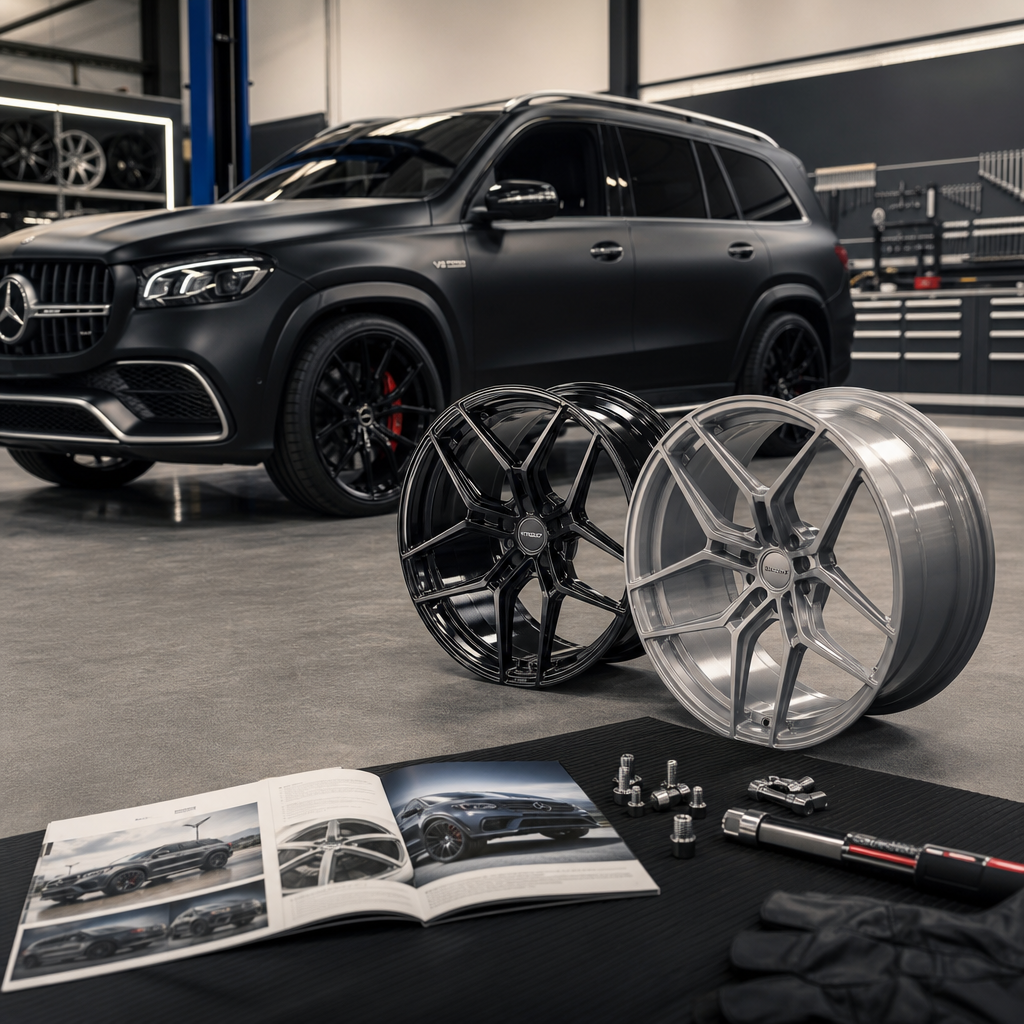
Forged Wheels for Luxury SUVs: A Buyer’s Guide to Fitment, Stance, and Premium Performance
Luxury SUVs demand more from a wheel upgrade than a standard passenger vehicle. Their weight, torque, braking systems, suspension geometry, and visual presence all make wheel selection more complex. A wheel that looks right in a photo may not be the right fit for a Mercedes-Benz G-Class, Range Rover, BMW X5, Porsche Cayenne, Lamborghini Urus, Bentley Bentayga, Audi Q8, or Mercedes-AMG performance SUV.
That is why forged wheels for luxury SUVs are such a popular premium upgrade. They can deliver strength, design flexibility, custom sizing, refined finishes, and a more tailored stance than many off-the-shelf alternatives. But forged SUV wheels should be selected carefully. The right setup balances:
- Vehicle-specific fitment
- Load capacity
- Brake clearance
- Offset and stance
- Tire compatibility
- Suspension setup
- Finish durability
- Installation confidence
- Authentic, authorized product sourcing
At 3W Distributing, wheel selection is treated as part of the full luxury performance build—not just an appearance change. Whether you are building a factory-clean daily driver, a wide and aggressive G-Class, a performance-focused Cayenne, or a luxury SUV with aero kits, performance exhaust systems, and interior carbon fiber upgrades, wheel fitment should be planned with precision.
You can shop forged and premium wheels through 3W Distributing to explore available wheel upgrade options for premium European and exotic vehicles.
—
What Are Forged Wheels?
Forged wheels are premium aluminum alloy wheels manufactured through a process designed to improve material density and structural integrity. They are commonly chosen for performance and luxury vehicles because they can offer an appealing balance of strength, weight control, design flexibility, and customization.
For a luxury SUV, those advantages matter. A large SUV places significant demands on the wheel due to vehicle weight, passenger and cargo capacity, braking forces, and road impact loads. When properly selected, forged wheels can support the visual and performance goals of a premium build while maintaining the practical requirements of a heavy vehicle.
How Forged Wheels Are Made
Forged wheels typically begin as a solid aluminum alloy billet or blank. This material is subjected to extremely high pressure, compressing the aluminum and refining its internal grain structure. The forged blank is then machined into its final wheel design using CNC equipment.
This process differs from casting, where molten aluminum is poured into a mold. Forging compresses the material rather than simply shaping it in liquid form. The result is a dense, strong structure that can be machined into sophisticated designs while maintaining durability when engineered correctly.
The forging process also allows manufacturers to remove material strategically during machining. That can help reduce unnecessary weight while preserving strength in critical areas such as the spokes, hub pad, barrel, and mounting face.
Forged vs. Cast Wheels
Both forged and cast wheels can be appropriate depending on the vehicle, budget, and intended use. The difference comes down to manufacturing method and engineering priorities.
Cast wheels are produced by pouring molten aluminum into a mold. They are typically more cost-effective and can be suitable for many street applications. However, cast wheels often require more material to achieve the required strength, which can make them heavier.
Forged wheels are formed under pressure and machined from a dense aluminum structure. They are generally chosen when buyers want premium quality, custom sizing, more advanced styling, and a stronger weight-to-strength relationship.
Key differences include:
| Factor | Forged Wheels | Cast Wheels |
|---|---|---|
| Manufacturing method | Compressed aluminum blank, CNC machined | Molten aluminum poured into mold |
| Weight potential | Often lighter when engineered properly | Often heavier for equivalent strength |
| Strength characteristics | Dense material structure | Dependent on casting method and design |
| Customization | High level of sizing and finish flexibility | Often limited to preset sizes |
| Cost range | Premium | Typically more accessible |
| Best use case | Luxury, performance, custom builds | General aftermarket replacement or styling |
A cast wheel is not automatically “bad,” and a forged wheel is not automatically correct for every SUV. The right choice depends on engineering, specifications, and fitment. However, for premium forged wheels on European and exotic SUVs, the forged construction process is often preferred because it aligns with the performance, appearance, and customization expectations of the vehicle.
Why Forged Wheels Are Popular for Luxury SUVs
Luxury SUV owners often choose forged wheels because they allow more precise control over the final setup. That matters when the goal is a refined stance rather than a generic aftermarket look.
Forged wheels can support:
- Larger diameters such as 22-inch, 23-inch, or 24-inch applications
- Wider fitments for a stronger stance
- Custom offsets for flush or aggressive positioning
- Concave wheel designs
- Brake-clearance-specific spoke profiles
- Premium finishes such as brushed, polished, tinted, or painted treatments
- Vehicle-specific configurations for heavy luxury SUVs
For buyers interested in luxury SUV wheels, forged construction is often the preferred path when the build requires both visual presence and fitment accuracy.
—
Why Luxury SUVs Need Specialized Wheel Fitment
Luxury SUVs are not simply larger sedans. They have different axle loads, suspension movement, brake dimensions, and tire requirements. This makes fitment planning essential.
A wheel may share the same bolt pattern as a vehicle but still be wrong due to offset, center bore, brake clearance, load rating, or tire sizing. For high-end vehicles, especially those with factory performance packages or modified suspension, fitment should be verified before ordering.
Luxury SUVs Are Heavier Than Sports Cars and Sedans
Vehicles such as the Mercedes-Benz G-Class, Range Rover, BMW X5/X7, Audi Q7/Q8, Bentley Bentayga, Lamborghini Urus, and Porsche Cayenne are substantially heavier than many sports cars and sedans. That weight affects the wheel selection process.
The wheel must be able to support the vehicle’s load requirements under real-world conditions, including:
- Vehicle curb weight
- Passenger load
- Cargo load
- Dynamic road forces
- Braking and cornering loads
- Impact from potholes and uneven pavement
This is why load rating is not optional. The wheel’s specifications should be appropriate for the vehicle and its use. A wheel designed for a lighter coupe may not be suitable for a large luxury SUV, even if it can physically bolt on.
When shopping for aftermarket wheels for luxury SUVs, always confirm that the wheel has an appropriate load rating for the application.
Brake Clearance Is Critical
Modern performance SUVs often have large brake calipers and rotors. In some cases, the front brakes can be especially difficult to clear because of caliper size and spoke shape.
Brake clearance depends on more than wheel diameter. A 22-inch wheel may still interfere with a caliper if the spoke profile or inner barrel design is not correct.
Important brake-clearance factors include:
- Wheel diameter
- Inner barrel shape
- Spoke curvature
- Hub pad thickness
- Offset
- Caliper height and width
- Rotor diameter
- Whether the vehicle has optional performance brakes
Visual fitment is not enough. A wheel can look correct from the outside and still fail to clear the brake system. This is one of the main reasons to work with a fitment-focused wheel supplier rather than relying only on appearance or generic fitment charts.
Suspension Setup Changes Everything
Suspension has a major effect on wheel and tire fitment. A wheel setup that works on factory ride height may rub when the vehicle is lowered. A setup that clears at normal air suspension height may contact the fender liner when the vehicle is aired down or fully compressed.
Common suspension variables include:
- Factory steel suspension
- Factory air suspension
- Lowering links
- Lowering modules
- Coilover upgrades
- Alignment settings
- Ride-height calibration
- Wheel spacers, if used
- Fender or liner modifications
Important clearance points include:
- Outer fender clearance
- Inner suspension clearance
- Upper control arm clearance
- Brake caliper clearance
- Fender liner clearance
- Tire contact at full steering lock
- Clearance during compression travel
If you are planning suspension changes, wheel selection should be coordinated with those changes. You can also shop suspension upgrades to evaluate compatible components for a complete luxury SUV build.
AWD Systems and Tire Diameter Matching
Many luxury SUVs use all-wheel-drive systems that may be sensitive to differences in rolling diameter between the front and rear tires. This is especially important for staggered setups, where the rear wheels and tires are wider than the front.
A staggered wheel setup can look excellent on vehicles such as the BMW X5, Porsche Cayenne, Lamborghini Urus, and Range Rover Sport. However, tire sizing must be selected carefully so the overall rolling diameter remains within an acceptable range for the vehicle.
Key tire diameter considerations include:
- Front-to-rear rolling circumference
- Sidewall height
- Tire brand and actual measured dimensions
- Load index
- Speed rating
- Seasonal tire availability
- AWD system requirements
The wheel and tire package should be selected together—not separately. A properly engineered setup will account for both the wheel dimensions and the tire specifications.
—
Key Factors When Choosing Forged Wheels for Luxury SUVs
Choosing forged wheels for luxury SUVs involves more than picking a style. The best setup is the one that fits the vehicle, supports the load, clears the brakes, works with the tires, and achieves the desired stance.
Wheel Diameter
Common luxury SUV wheel diameters include:
- 20-inch
- 21-inch
- 22-inch
- 23-inch
- 24-inch
The right size depends on the vehicle platform, brake system, tire availability, ride quality goals, and visual preference.
20-inch wheels can offer more tire sidewall, which may improve comfort and impact protection compared with larger diameters. They can be a practical choice for daily use, rough roads, or winter tire setups.
21-inch wheels are common on many factory luxury SUV packages and can provide a balance between comfort and style.
22-inch wheels are one of the most popular upgrade sizes for luxury SUVs because they offer strong visual presence while still maintaining broad tire availability on many platforms.
23-inch wheels are common on aggressive luxury SUV builds, especially where the goal is a more modern performance stance.
24-inch wheels create maximum visual impact but require careful attention to tire sizing, ride quality, fender clearance, and load rating.
Larger wheels generally reduce tire sidewall height, which can sharpen appearance but may affect ride comfort and increase sensitivity to road impacts. The best diameter is not always the largest one available. It is the size that best fits the vehicle’s purpose.
Wheel Width
Wheel width affects stance, tire selection, sidewall shape, and clearance. A wider wheel can create a stronger footprint and more planted appearance, but too much width can cause rubbing or make tire selection more difficult.
Wheel width influences:
- How the tire sits on the wheel
- Sidewall stretch or square fitment
- Fender clearance
- Inner suspension clearance
- Overall stance
- Concavity potential
- Tire availability
Luxury SUVs often benefit from carefully selected width rather than simply choosing the widest possible setup. For example, a flush, daily-friendly wheel fitment may be more desirable than an extreme setup that rubs during normal driving.
Offset
Wheel offset describes the position of the wheel’s mounting surface relative to the centerline of the wheel. It determines how far the wheel sits inward or outward.
- A higher positive offset generally pulls the wheel inward.
- A lower offset generally pushes the wheel outward.
- Too much inward positioning can cause suspension or brake interference.
- Too much outward positioning can cause fender rubbing or an overly aggressive poke.
Common buyer goals include:
- OEM-plus fitment: slightly improved stance while preserving factory-like drivability
- Flush fitment: wheels align closely with the fenders
- Aggressive concave look: wider wheels and lower offsets create deeper visual depth
- Widebody or lowered fitment: more specialized measurements for modified builds
Incorrect offset can cause rubbing, poor stance, vibration concerns, uneven tire wear, or interference with suspension and brakes. This is one of the most important fitment specifications to verify before ordering forged SUV wheels.
Bolt Pattern and Center Bore
Bolt pattern and center bore must match the vehicle or be properly engineered for the application.
The bolt pattern refers to the number of lug holes and the diameter of the circle they form. The wheel must match the vehicle’s lug configuration.
The center bore is the hole in the center of the wheel that fits over the vehicle’s hub. A hub-centric fitment helps center the wheel properly and can support smoother installation and driving behavior.
If a center bore is larger than the vehicle hub, hub-centric rings may be used in some applications. However, premium forged wheels are often engineered with vehicle-specific center bores when ordered for a specific platform.
Load Rating
Load rating is especially important for luxury SUVs. These vehicles are heavier than sedans and often carry passengers, luggage, cargo, and performance equipment.
Before purchasing wheels, verify:
- Wheel load rating
- Vehicle axle load requirements
- Intended use
- Tire load index
- Whether the setup is appropriate for daily driving
- Whether the wheels are designed for SUV applications
Do not assume that a wheel is appropriate simply because it is large enough or has the correct bolt pattern. For luxury SUV wheel fitment, load capacity should be treated as a core requirement.
Tire Compatibility
The wheel and tire package should be selected together. A wheel may be technically correct, but if the ideal tire size is unavailable or does not meet the required load index, the setup may not be practical.
Tire compatibility includes:
- Tire width
- Aspect ratio
- Overall diameter
- Load index
- Speed rating
- Tire shoulder shape
- Seasonal use
- Summer, all-season, or winter application
- Availability from premium tire manufacturers
- Front-to-rear diameter matching on AWD vehicles
Staggered setups require additional planning because front and rear tire sizes must work together. A wider rear tire may improve the visual stance, but the overall rolling diameter should remain appropriate for the vehicle.
If you are comparing options, explore wheel and tire fitment options through 3W Distributing’s wheel search.
—
Choosing the Right Stance for a Luxury SUV
Stance is the relationship between wheel width, offset, tire profile, ride height, and fender position. For luxury SUVs, stance should look intentional—not improvised.
A premium stance should complement the vehicle’s body lines, suspension setup, and intended use. The right fitment can make a G-Class look more commanding, a Range Rover look more refined, or a Urus look more athletic.
OEM-Plus Fitment
OEM-plus fitment is a refined upgrade that improves the vehicle’s presence without appearing extreme. It is ideal for buyers who want a premium look while preserving daily drivability.
OEM-plus fitment is best for:
- Daily-driven SUVs
- Factory suspension
- Lease-friendly styling
- Luxury-focused builds
- Drivers who want a clean, understated appearance
Common characteristics include:
- Slightly wider wheel sizing
- Conservative offset adjustments
- Clean flush or near-flush stance
- Premium forged finish
- Factory-like drivability
- Minimal rubbing risk when properly selected
This approach is especially effective for vehicles such as the Range Rover, Porsche Cayenne, BMW X5, and Mercedes-Benz G-Class when the goal is sophistication rather than maximum aggression.
Flush Fitment
Flush fitment positions the wheels close to the outer edge of the fenders without excessive poke. This is one of the most popular looks for luxury SUVs because it gives the vehicle a planted, high-end appearance.
Flush fitment is common on:
- Range Rover and Range Rover Sport
- Mercedes-Benz G-Class
- Porsche Cayenne
- Lamborghini Urus
- BMW X5 and X7
- Audi Q8 and RS Q8
- Bentley Bentayga
A flush setup requires precise planning. Width, offset, tire size, and suspension height must all work together. Even a few millimeters can change whether the tire sits cleanly, rubs the liner, or protrudes too far.
Aggressive Concave Fitment
Concave wheels for SUVs are popular because they add depth and visual drama. A deep concave wheel can make a large SUV look wider, lower, and more performance-focused.
Concavity depends on:
- Wheel width
- Offset
- Brake clearance
- Vehicle platform
- Spoke design
- Hub pad height
- Wheel diameter
Not every SUV can run the deepest concave profile without compromises. Large brake calipers may require a less aggressive spoke shape. Some vehicles need more positive offset, which can reduce concavity. Others have fender or suspension limitations that restrict wheel width.
A good forged wheel setup balances concavity with proper clearance and safe fitment.
Lowered or Air-Suspension Setups
Lowered SUVs require additional fitment planning. When ride height changes, the wheel and tire move differently through the suspension arc. This can create rubbing that would not occur at stock height.
Considerations include:
- Compression travel
- Fender clearance
- Tire shoulder shape
- Turning radius
- Alignment settings
- Camber changes
- Air suspension ride height modes
- Load-leveling behavior
- Clearance at full lock
If your SUV uses lowering links, lowering modules, or coilovers, confirm measurements before ordering wheels. The most aggressive fitment on paper is not always the best setup for real-world driving.
—
Popular Luxury SUVs for Forged Wheel Upgrades
Different luxury SUVs have different wheel fitment priorities. A Mercedes-Benz G-Class does not have the same stance requirements as a Porsche Cayenne, and a Lamborghini Urus does not use the same visual language as a Range Rover.
Below are common platforms where premium forged wheels are popular.
Mercedes-Benz G-Class
The Mercedes-Benz G-Class has one of the strongest visual identities in the SUV market. Its upright body, wide fenders, and luxury-performance image make it a natural platform for forged wheels.
Key considerations for Mercedes-Benz G-Class forged wheels include:
- Heavy-duty fitment requirements
- Load capacity
- Brake and fender clearance
- Bold spoke designs
- 22-inch and 24-inch popularity
- Tire sidewall balance
- Aggressive stance without compromising drivability
Common style directions include:
- Monoblock-inspired designs
- Deep concave forged wheels
- Brushed finishes
- Gloss black or satin black finishes
- Two-tone finishes
- Luxury-performance styling that complements BRABUS parts
The G-Class is also frequently upgraded beyond wheels. Buyers may pair Mercedes-Benz G-Class tuning parts with aero kits, performance exhaust systems, interior carbon fiber upgrades, and exterior carbon fiber styling.
For example, the Urban Automotive Mercedes W465 G-Wagon aero kit is a visual carbon fiber upgrade for the 2025+ W465 G-Wagon. A build like this benefits from wheel fitment that complements the added exterior aggression.
Performance-focused W465 G63 AMG owners may also consider the Eventuri Mercedes W465 G63 AMG carbon intake as part of a broader performance and styling package.
Range Rover and Range Rover Sport
Range Rover models are often upgraded with forged wheels to enhance their luxury presence. These vehicles usually look best with refined, confident fitment rather than overly aggressive wheel poke.
Key considerations include:
- Clean flush stance
- Premium finish selection
- Load rating
- Tire comfort
- Air suspension movement
- Brake clearance on higher-performance trims
Custom wheels for Range Rover builds often emphasize elegance. Brushed silver, dark tinted brushed, satin black, and polished accents can work well depending on the exterior color and trim package.
Because Range Rover models often use air suspension, wheel and tire sizing should account for multiple ride heights. Clearance should be checked at normal driving height, access height, and compressed suspension positions where applicable.
BMW X5 and X7
Forged wheels for BMW X5 and X7 models are popular because these SUVs respond well to wider, sportier fitment. The body shape supports both OEM-plus and aggressive concave setups.
Key considerations include:
- Staggered fitment planning
- Rolling diameter compatibility
- Brake clearance on M Sport and M models
- Tire load index
- Inner suspension clearance
- Fender clearance with wider rear wheels
A BMW X5 can look especially strong with a flush staggered setup, while the larger X7 often benefits from a more luxurious wheel design that suits its size and road presence.
When selecting forged wheels for BMW X5 or X7 applications, tire sizing is especially important. Many builds use different front and rear widths, so tire diameter matching should be reviewed carefully.
Porsche Cayenne
Porsche Cayenne wheels must support both luxury styling and performance expectations. The Cayenne is often driven more dynamically than many SUVs, so wheel weight, tire choice, and brake clearance should be carefully considered.
Key considerations include:
- Brake clearance for high-performance trims
- Weight-conscious wheel selection
- Tire performance category
- Staggered setup compatibility
- Speed rating
- Load rating
- Alignment and suspension setup
The Cayenne can support an OEM-plus appearance, a flush performance stance, or a more aggressive forged wheel setup depending on the trim and suspension. For performance-oriented builds, reducing unnecessary wheel weight may be a priority, though exact weight savings depend on the specific wheel design and size.
Lamborghini Urus
The Lamborghini Urus has a bold factory design and supports aggressive forged wheel fitments. Many owners choose larger diameters and concave designs to match the SUV’s exotic character.
Key considerations include:
- Large brake clearance
- Aggressive stance
- High-load wheel construction
- Tire availability in large sizes
- Finish selection that matches exotic styling
- Clearance with suspension height changes
The Urus can visually support dramatic wheel designs, but fitment still needs to be engineered carefully. Brake packaging, tire diameter, and fender clearance are critical.
Bentley Bentayga
The Bentley Bentayga requires a more refined wheel approach. It is a high-end luxury SUV where finish quality and proportional design matter as much as size.
Key considerations include:
- Premium forged finishes
- Load rating
- Ride comfort
- Tire sidewall selection
- Luxury-focused stance
- Smooth hub-centric installation
- Brake clearance
Bentayga buyers often prefer wheels that enhance the vehicle without making it appear overly modified. Brushed, polished, and dark tinted finishes can suit the vehicle’s upscale design language.
Audi Q7, Q8, and RS Q8
Audi luxury SUVs respond well to clean, modern wheel designs. The Q8 and RS Q8 in particular can support aggressive forged setups with strong concavity when properly specified.
Key considerations include:
- Brake clearance on performance trims
- Quattro AWD tire diameter matching
- Wheel width and offset planning
- Tire load index
- Fender clearance
- Suspension setup
A flush fitment with a premium forged finish can make an Audi SUV look more athletic without compromising the clean factory design.
Mercedes-AMG GLE and GLS
Mercedes-AMG SUV platforms often combine luxury, power, and daily usability. Wheel selection should account for brake clearance, tire load index, and the vehicle’s performance character.
Owners considering broader upgrades may also look at FI Exhaust Mercedes AMG exhaust systems. For example, 3W Distributing offers an FI Exhaust Mercedes AMG GLE 63 system for W167/C167 AMG GLE 63/S applications. When wheels, exhaust, and other upgrades are planned together, the final build can feel more cohesive.
—
Finish Options for Premium Forged Wheels
Wheel finish has a major impact on the final look of a luxury SUV. The same wheel design can look subtle, exotic, aggressive, or formal depending on the finish.
Popular forged wheel finishes include:
- Gloss black
- Satin black
- Matte black
- Brushed aluminum
- Brushed dark tint
- Polished aluminum
- Gunmetal
- Bronze
- Champagne
- Color-matched paint
- Two-tone finishes
Matching Finish to Vehicle Style
A black G-Class with carbon aero may look cohesive with satin black, gloss black, or dark brushed wheels. A white Range Rover may look more refined with brushed silver or polished accents. A Porsche Cayenne in a performance color may support bronze or gunmetal wheels.
Finish selection should account for:
- Exterior paint color
- Trim finish
- Brake caliper color
- Carbon fiber parts
- Chrome or black exterior details
- Desired level of contrast
- Maintenance expectations
Brushed and polished finishes can highlight the machining quality of forged wheels. Black finishes can create a more aggressive look but may hide spoke details. Bronze and champagne finishes can add warmth and contrast, especially on dark paint colors.
Durability and Maintenance
Luxury SUV wheels are exposed to brake dust, road debris, weather, and cleaning chemicals. Finish quality matters.
To preserve the finish:
- Use wheel-safe cleaners
- Avoid harsh acids unless approved for the finish
- Clean brake dust regularly
- Use soft brushes or microfiber tools
- Avoid automatic car washes with abrasive equipment
- Consider protective coatings where appropriate
Premium forged wheels deserve proper maintenance. A high-quality wheel finish can remain visually impressive with the right care routine.
—
Authentic and Authorized Sourcing Matters
When buying forged wheels for luxury SUVs, sourcing matters. Premium vehicles deserve authentic components, accurate specifications, and trustworthy product information.
Counterfeit, misrepresented, or poorly specified wheels can create serious concerns, including:
- Unknown load rating
- Inaccurate fitment data
- Poor finish quality
- Questionable material quality
- Brake clearance problems
- Vibration or installation issues
- Lack of clear product documentation
3W Distributing focuses on authentic premium upgrades for European and exotic vehicles, including BRABUS parts, Mercedes-Benz G-Class tuning parts, aero kits, forged wheels, performance exhaust systems, and interior carbon fiber upgrades.
For buyers, authorized sourcing is not just about brand prestige. It is about confidence that the product is represented accurately and selected appropriately for the vehicle.
You can browse authentic premium upgrades through the 3W Distributing shop.
—
Installation Confidence: What to Confirm Before Mounting
Even the right wheel must be installed correctly. Before mounting forged wheels on a luxury SUV, confirm the complete package.
Pre-Installation Checklist
Before installation, verify:
- Wheel size
- Wheel width
- Offset
- Bolt pattern
- Center bore
- Load rating
- Tire size
- Tire load index
- Tire speed rating
- Brake clearance
- Lug bolt or lug nut compatibility
- TPMS compatibility
- Hub-centric fitment
- Suspension clearance
- Fender clearance
Test Fitment
A careful test fit is recommended, especially for custom forged wheels or aggressive setups. During test fitment, the installer should check:
- Front brake clearance
- Rear brake clearance
- Inner barrel clearance
- Spoke-to-caliper clearance
- Hub seating
- Fender clearance
- Suspension clearance
- Tire clearance at full lock
- Tire clearance under compression where possible
Hardware and Torque
Luxury SUVs often use specific lug bolts, lug nuts, or wheel hardware. The correct seat type, thread pitch, shank length, and torque specification matter.
Always use the appropriate hardware for the wheel and vehicle. Torque should be applied according to the vehicle or wheel manufacturer’s requirements. Rechecking torque after initial driving is commonly recommended by installers, but follow the guidance provided for your specific vehicle and wheel package.
Alignment
If the vehicle is lowered or if the tire size changes significantly, alignment should be reviewed. Incorrect alignment can cause uneven tire wear, poor tracking, or clearance issues.
Alignment is especially important for:
- Lowered SUVs
- Air-suspension vehicles
- Staggered setups
- Aggressive concave fitments
- Wide tire packages
—
Practical Buying Tips for Forged SUV Wheels
A premium wheel purchase should be deliberate. Use the following process when selecting forged wheels for a luxury SUV.
1. Start With the Vehicle, Not the Wheel
The vehicle platform determines what is possible. A wheel that fits a Porsche Cayenne may not fit a G-Class. A setup that works on a BMW X5 may not suit a Range Rover. Begin with the year, make, model, trim, brake package, and suspension setup.
2. Define the Goal
Decide what kind of build you want:
- OEM-plus luxury
- Flush daily-driver stance
- Aggressive concave appearance
- Widebody fitment
- Lowered performance stance
- Maximum visual impact
- Comfort-focused upgrade
The goal determines wheel size, width, offset, and finish.
3. Confirm Tire Availability
Before committing to a wheel size, confirm that suitable tires are available. Large SUV tire sizes can be more limited, especially in 23-inch and 24-inch applications.
Confirm:
- Tire size
- Load index
- Speed rating
- Seasonal category
- Brand availability
- Rolling diameter compatibility
- Front/rear matching for staggered setups
4. Prioritize Load Rating
Do not compromise load rating for appearance. A luxury SUV requires wheels and tires appropriate for its weight and use.
5. Match the Finish to the Build
Choose a finish that complements the vehicle’s exterior, trim, brake calipers, and other upgrades. If your SUV has carbon fiber exterior upgrades, a dark brushed or satin finish may pair well. If the vehicle has bright trim, a polished or brushed finish may look more cohesive.
6. Consider the Full Build
Wheels rarely exist in isolation. They should work with the vehicle’s aero, suspension, exhaust, interior, and exterior details. A G-Class with an aero kit may need a more assertive wheel than a stock luxury SUV. A Range Rover used primarily for executive daily driving may benefit from a more restrained setup.
7. Work With Fitment-Focused Specialists
Luxury SUV wheel fitment can be complex. A knowledgeable source can help evaluate sizing, brake clearance, tire pairing, and stance before the order is placed.
For fitment-focused shopping, start with 3W Distributing’s wheel selection.
—
Common Mistakes to Avoid
Choosing Wheels Based Only on Diameter
A 22-inch wheel is not automatically correct because it is a common SUV size. Width, offset, brake clearance, and tire size are just as important.
Ignoring Load Rating
Luxury SUVs are heavy. Load rating must be verified before purchase.
Assuming All Staggered Setups Are Safe for AWD
Staggered fitments can work well, but tire rolling diameter must be compatible with the AWD system.
Prioritizing Concavity Over Brake Clearance
Deep concave wheels look excellent, but brake clearance comes first. A wheel that does not clear the brakes is not usable.
Overlooking Tire Availability
Some large wheel sizes have fewer tire options. Confirm the tire before ordering the wheel.
Forgetting About Suspension Changes
Lowering links, air suspension adjustments, and coilovers can change fitment dramatically.
Buying From Unverified Sources
Premium wheels should be sourced from reputable channels with accurate product information. Authentic sourcing helps reduce the risk of incorrect specifications or questionable quality.
—
FAQ: Forged Wheels for Luxury SUVs
Are forged wheels worth it for luxury SUVs?
Forged wheels can be worth it for luxury SUVs when the buyer wants premium construction, custom fitment, high-end finishes, and a refined stance. The value depends on the specific wheel, vehicle, and intended use.
Are forged wheels always lighter?
Not always. Forged wheels often have strong weight-saving potential, but final weight depends on size, width, design, load rating, and engineering. A large forged SUV wheel may still be heavy because it must support a large vehicle.
What is the best wheel size for a luxury SUV?
There is no single best size. Many luxury SUVs use 21-inch, 22-inch, 23-inch, or 24-inch wheels depending on the platform and build goal. The best size balances appearance, tire availability, ride comfort, brake clearance, and load rating.
Can I run staggered wheels on an AWD luxury SUV?
In many cases, yes, but front and rear tire rolling diameters must be compatible with the vehicle’s AWD system. Tire sizing should be planned carefully.
Do forged wheels improve performance?
They can contribute to performance when they reduce unnecessary rotational weight and support better tire fitment. However, performance gains depend on the specific wheel, tire, and vehicle setup.
What is hub-centric fitment?
Hub-centric fitment means the wheel centers properly on the vehicle’s hub. This can support smoother installation and reduce the likelihood of vibration caused by improper centering.
What stance is best for daily driving?
OEM-plus or clean flush fitment is often best for daily driving. These setups improve appearance while preserving practical clearance and drivability when properly selected.
—
Final Thoughts: Buy Forged Wheels With Fitment First
Forged wheels for luxury SUVs are more than a styling upgrade. They are a fitment, engineering, and design decision. The right wheel can transform the stance of a G-Class, sharpen the presence of a Range Rover, enhance the performance character of a Porsche Cayenne, or give a BMW X5 a more planted and premium appearance.
The best forged SUV wheels are selected with the full vehicle in mind:
- Correct diameter
- Correct width
- Correct offset
- Proper brake clearance
- Appropriate load rating
- Tire compatibility
- Suspension awareness
- Premium finish quality
- Authentic sourcing
For premium European and exotic SUV upgrades, 3W Distributing helps buyers approach wheel selection with the level of precision these vehicles deserve.
Start your search and shop forged and premium wheels through 3W Distributing.